Upcoming week:
There is NO SCHOOL Monday, October 31, or Tuesday, November 1.
Language Arts:
We will begin a unit on poetry in reading and writing, starting with poetry about animals and their habitats. Students will focus on rhyme, rhythm, syllables, and more! We will also look closely at the endings -ed and -ing, which are often dropped in our speech, so students naturally drop them in their writing. Encouraging children to speak clearly helps their writing and spelling.
Math:
We finished up chapter 2, and will spend a few days thinking about multiplication, as well as getting ready for chapter 3: adding two-digit numbers. This will draw heavily on students' ability to add single-digit numbers and understand place value.
Content area studies (science):
We will finish up our unit of science learning about animals' adaptations and ecosystems.
Social/life skills:
We will continue to work on kindness and compliments.
Week in review:
Language Arts:
We read science articles about animals' physical adaptations, and especially learned about bioluminescence in sea creatures, some insects, and mushrooms. Students worked very hard to publish their "scary" stories they wrote this month. They will be bringing them home this weekend, so please be sure to read it!
Math:
We wrapped up chapter 2, all about repeated addition.
Content area studies (science):
We learned about various ecosystems, and members of food webs and food chains. Your second grader has been working on a book about food webs, which will come home next week. They should be able to explain to you:
- All food webs start with the sun
- Producers are plants that get energy from the sun to PRODUCE their own food
- Consumers eat producers or other consumers
- Animals can be nocturnal, diurnal (busy in the daytime), or crepuscular (busy at dawn and dusk)
- Apex predators are predators at the top of a food web: sharks, humans, eagles, and owls are some apex predators we have discussed
- Decomposers are fungi, insects, and scavengers who help break down dead matter and waste
Social/life skills:
We've been having a rough few weeks, so this week we did a reset with the wonderful book "How Full is Your Bucket?"
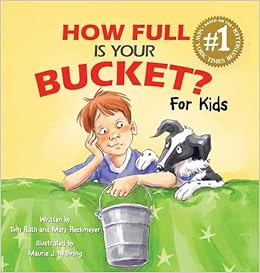
This parable helps children envision how their actions build others up (fill their buckets) or hurt them (dip from others' buckets). We've worked on how to help when we see someone whose bucket is low or empty. Sometimes a bucket is running low because someone does not feel well, they had a hectic morning, or because they are lonely. Students have been observing each other in order to write compliments about each other. We will continue to work on quality compliments: "you are nice," is not as meaningful as "I noticed how you play so kindly with the kindergarteners," or "You invited me to play with you when I was bored, and that made me feel really good."
Conferences start November 7; I look forward to getting to speak with you in-depth about your child's work so far in second grade. We will review Progress Portfolios, look at in-class and school-wide assessment results, and discuss behavior, as well as any concerns you might have.
